Knowledge
Chunjian tangerine wholesale price: what a dated benchmark shows and what sets the quote
A Chunjian price only means something for a named size, carton, volume, port and week. Chinese origin markets listed it on 17 November 2026 at 0.32 to 4.25 yuan per jin, a wide spread, because November is not the main picking time. This note explains the benchmark, what it leaves out and what we need from you to quote.
We do not publish a price
Cunjindi quotes per order. The numbers below come from a third-party platform and are not offers. They tell you the range in the Chinese origin market on the day we looked, nothing more.
The benchmark: 17 November 2026
Huinong, a Chinese agricultural trading platform, listed 15 quotations for Papa Gan, the Sichuan market name for Chunjian, on 17 November 2026. They ranged from 0.32 to 4.25 yuan per jin, that is 0.64 to 8.50 yuan per kilogram. Examples in the list: Pujiang 3.13 yuan per jin, Qionglai 2.86 and Rongxian 0.99.
The spread is the finding. The listings mix districts, sizes, storage lots and early fruit. They are platform quotations, not an official index, and a few may be asking prices.
Why November is a poor month to read a price
The main picking and marketing window is late January to March: Citrus China puts it as late January through March, and Ehime’s page gives early February to late March for Harumi in Japan. Our reference window is January to February, with most volume in January. A November listing describes stored or early fruit, so a price read then does not carry forward to the window when you would import.
What sets an export quote
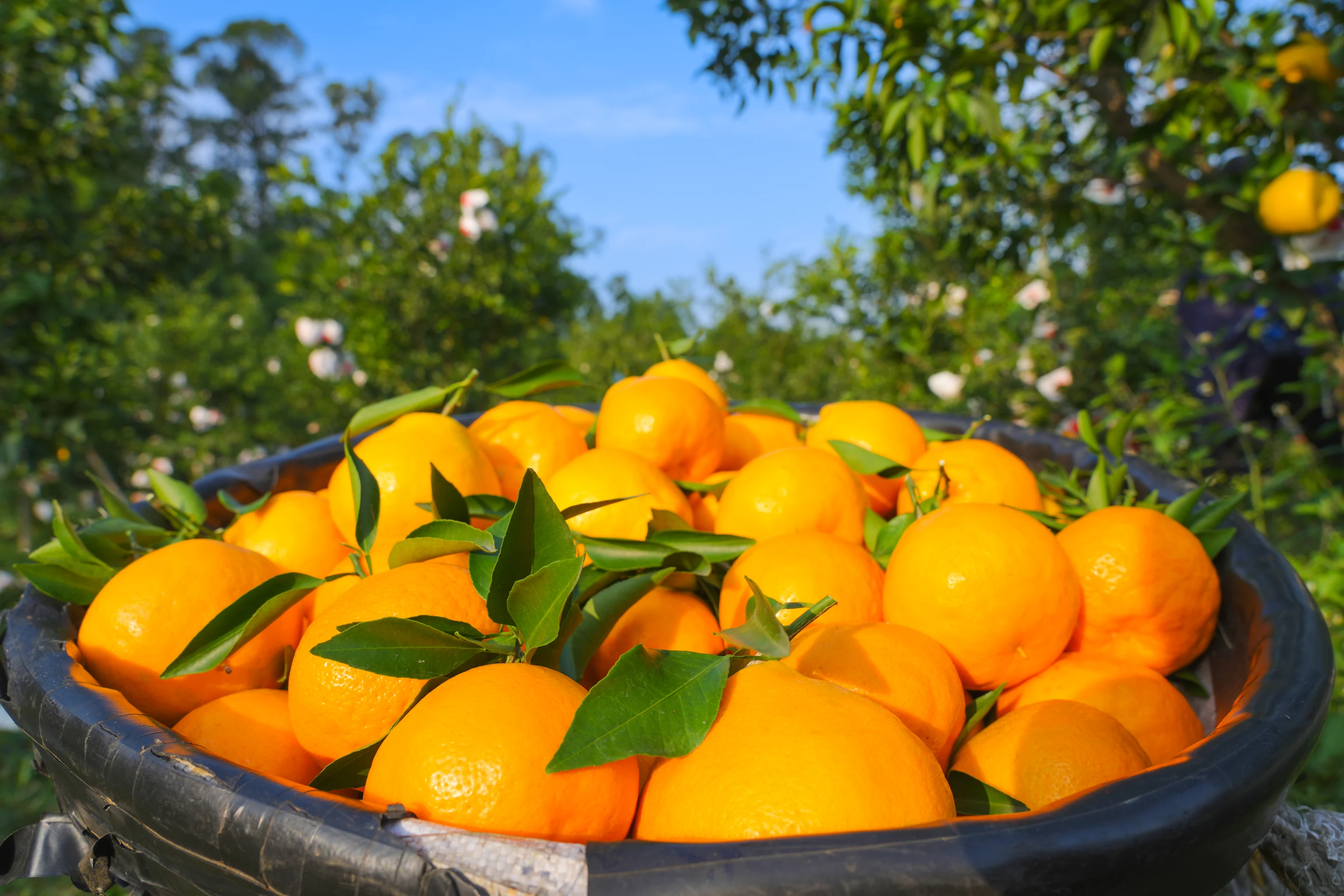
Size and grade come first. Our fruit weighs 200 to 320 g and Brix is 13 to 15 degrees, so a size band narrower than that changes the price. Then the carton: a 1.5 kg or 2.5 kg gift box costs more to pack per kilogram than a 5 kg export carton. Then cartons per container, the week, the Incoterm and port, and payment terms.
The cost stages add up: farm-gate or market price, sorting to size and Brix, packing material, inland haulage, export documents, reefer freight if CFR or CIF, and margin. Domestic listings carry only the first.
How to compare two Chunjian offers
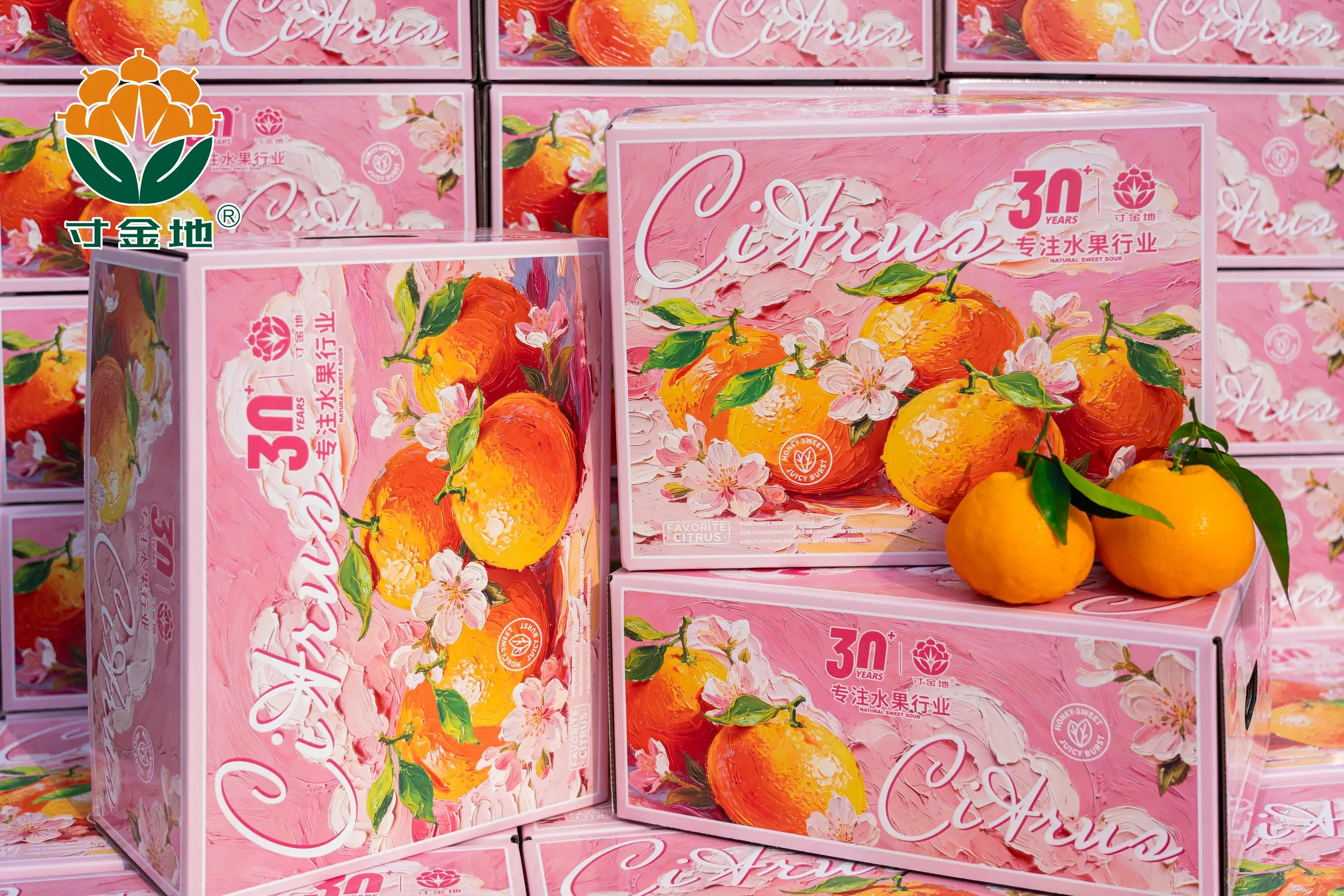
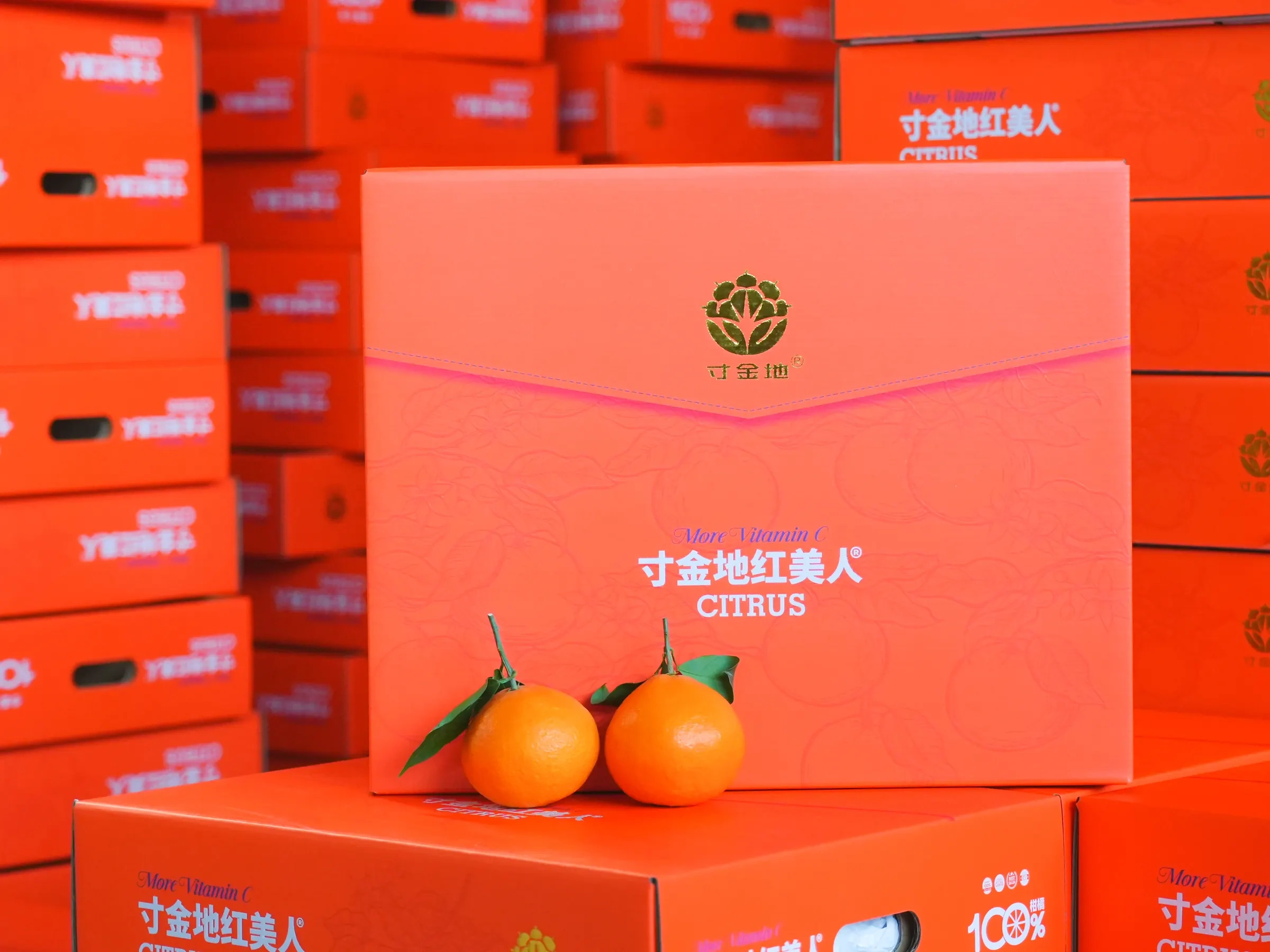
Put both offers on the same lines: variety name (Chunjian, Harumi or Papa Gan), size or count, carton net weight and type, cartons per container, packing week, Incoterm and port, and the payment schedule. A 2.5 kg gift box and a 5 kg export carton are different products at the same price per kilogram.
Size, count and what a grade means
Chunjian is sold by size band and by Brix. Our published specification is 200 to 320 g per fruit and 13 to 15 degrees Brix. A supplier quoting a wider band is pricing the average of several grades; one quoting a narrower band is pricing a sorted fruit. Ask each supplier to quote the same band and to state how the fruit is sorted, by size on a machine or by eye on a table, and what share is outside the band.
Count per carton is the second half of the same question. A larger fruit means fewer fruit in a 5 kg carton, and the same price per kilogram does not mean the same price per fruit on the shelf.
Reading units, currency and dates
Chinese origin markets quote in yuan per jin; export quotations are in US dollars per kilogram or per carton. A jin is half a kilogram, so double a per-jin number before you compare. Exchange-rate moves between a listing date and your order date are a separate risk, which is why our quotations carry a validity date.
A price without a date is not a price. A listing from November says nothing about January, and a listing from the packing week says nothing about the week of loading. When you compare any two numbers, write the date and the stage (farm gate, wholesale market or FOB) beside each.
What we need from you to quote
Send the variety name as you sell it, the size band or count, the carton, the number of cartons or containers, the destination port or rail terminal, the arrival month and the Incoterm. If you are comparing us with another supplier, send their offer lines and we will answer on the same lines or say where our fruit differs.
Chunjian origin-market benchmark, 17 November 2026
| Item | Yuan per jin | Yuan per kg |
|---|---|---|
| Lowest of 15 listings | 0.32 | 0.64 |
| Highest of 15 listings | 4.25 | 8.50 |
| Pujiang listing | 3.13 | 6.26 |
| Qionglai listing | 2.86 | 5.72 |
| Rongxian listing | 0.99 | 1.98 |
Source: Huinong platform quotations, sample of 17 November 2026. 1 jin = 0.5 kg. Third-party figures, not Cunjindi prices.
Chunjian trade terms
| Fruit line | Cartons | 40’ reefer load | Carriage |
|---|---|---|---|
| Chunjian Tangerine | 1.5 kg or 2.5 kg gift boxes · 4 kg, 4.5 kg or 5 kg export cartons | About 2,400 × 5 kg cartons, about 12 t net, on 20 pallets — typical planning load, confirmed in the packing plan | 6 °C set point · 90–95% relative humidity · not below 5 °C |
Planning terms, confirmed in the pro-forma invoice and packing plan for each order.