Knowledge
China fresh prune and plum exporter: Xinjiang French prune, season, HS code and cold chain
A fresh prune is a plum, declared under HS 0809.40. A dried prune is under 0813.20. Search results mix the two. This note is about the fresh Xinjiang French prune: its August to September window, the cold chain it needs, the code to declare and what to confirm before ordering.
Fresh prune or dried prune?
“Prune” means a dried plum in many markets and a fresh European plum, Prunus domestica, in others. Customs does not leave room for both readings. Heading 0809 covers fresh apricots, cherries, peaches, plums and sloes, and its subheading 0809.40 is plums and sloes. Dried prunes sit in heading 0813, subheading 0813.20. A quotation that says only “prune” leaves the code, the cold chain and the price unsettled.
Everything on this page is about fresh fruit: harvested, packed cold and sold within weeks. If you need dried prunes, say so and we will tell you plainly that this is not our line.
The distinction matters for tariffs as well as logistics. Duty, quota and health-certificate rules for fresh and dried fruit are written separately, and an importer who files a fresh-fruit consignment under the dried-fruit line, or the reverse, risks a correction at the border. Check the line on the invoice against the product on the pallet.
Where the fruit comes from
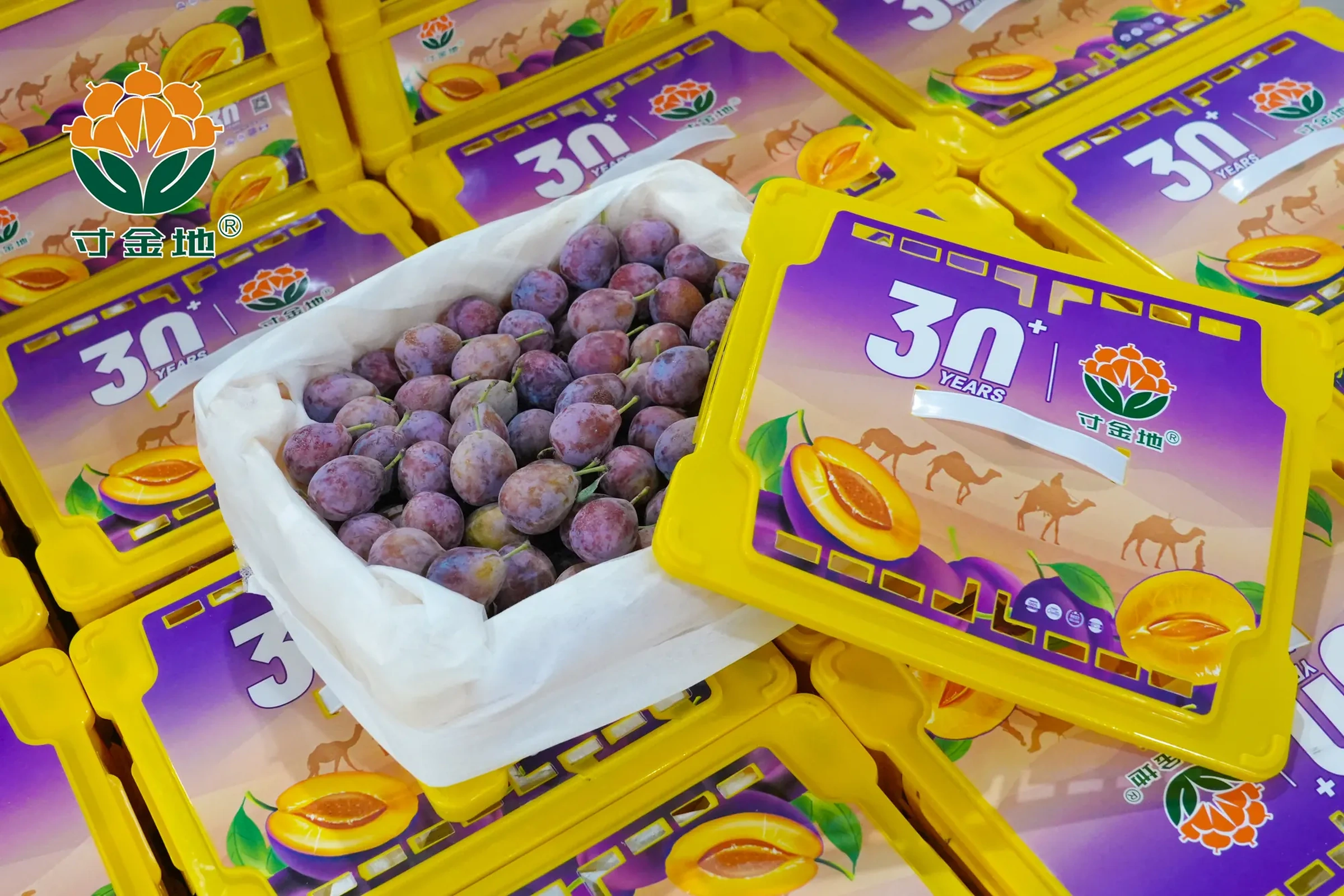
Our French prune is grown in Jiashi, Xinjiang, China, in a temperate continental climate with long sunshine hours and dry air that help build sugar. The reference window is August to September with most volume in August. The size, sweetness and carton details below come from the same fact file as the product page.
Prunes keep for a shorter time than citrus. Published references give 3 to 6 weeks depending on cultivar, and our plan is no more than 21 days from packing to the shelf.
Cold chain: 0 °C, vents closed
Plums are chilling-tolerant at 0 °C and are best held at that point, according to UC Davis postharvest guidance and the Cargo Handbook. We plan prunes at a 0 °C set point and 90 to 95% relative humidity with the vents closed. That is a different set point from pomegranate or citrus, which is why prunes always travel alone and cannot share a container with them.
Because of the shorter life, prunes are planned for air, rail or road from Chengdu rather than long sea routes. Ask for the transport plan and the temperature record in the quotation.
A practical test of any cold-chain plan is the handover list: who receives the fruit at the packhouse, who pre-cools it, who loads the container or aircraft, and who holds the temperature record at each stage. For fruit with a three-week life, a day lost at a handover is a day off the shelf.
The HS code, in detail
For fresh prunes the China tariff line is 0809400090. The neighbouring line 0809400010 is ume, a different fruit, and should not be used. The European Union’s combined nomenclature line is 0809 40 05, and the Eurasian Economic Union’s is 0809 40 050 0. Confirm the code for your consignment with your customs broker: tariff lines and duty change.
What to put in the enquiry
Name the pack (800 g punnets in a master carton or 5 kg loose-pack trays), the quantity, the destination airport, rail terminal or port, the week you want the fruit on the shelf and the Incoterm. Prunes have a narrow window; a buyer who confirms in July gets the size band they asked for rather than what is left.
Fresh prune versus dried prune
| Feature | Fresh prune (plum) | Dried prune |
|---|---|---|
| Harmonized System | 0809.40, plums and sloes, fresh | 0813.20, prunes, dried |
| Storage period | Weeks, cold chain | Months, ambient |
| Transport | 0 °C reefer, air, rail or road | Dry cargo |
| Season | Harvest window, August to September from Jiashi, Xinjiang, China | Year-round from stock |
| Cunjindi line | Yes, Xinjiang French prune | No |
Headings follow the Harmonized System; confirm the national tariff line for your market.
Xinjiang French prune trade terms
| Fruit line | Cartons | Container load | Carriage | Transit plan | HS code |
|---|---|---|---|---|---|
| Xinjiang French Prune | 800 g punnets, six to a 4.8 kg master carton · or 5 kg loose-pack trays | About 3,000 × 5 kg cartons, about 15 t net, on 20 pallets — typical planning load, confirmed in the packing plan | 0 °C set point · 90–95% relative humidity · vents closed | Planned for no more than 21 days from packing to the shelf; air, rail or road rather than long sea routes | 0809.40 · China 0809400090 · EU 0809 40 05 · EAEU 0809 40 050 0 — confirm with your customs broker |
Planning terms, confirmed in the pro-forma invoice and packing plan for each order.